


What’s inside:
- 70+ examples of workplace adjustments you can request, across 9 key areas – from sensory breaks and scheduling support to interview adjustments and job design.
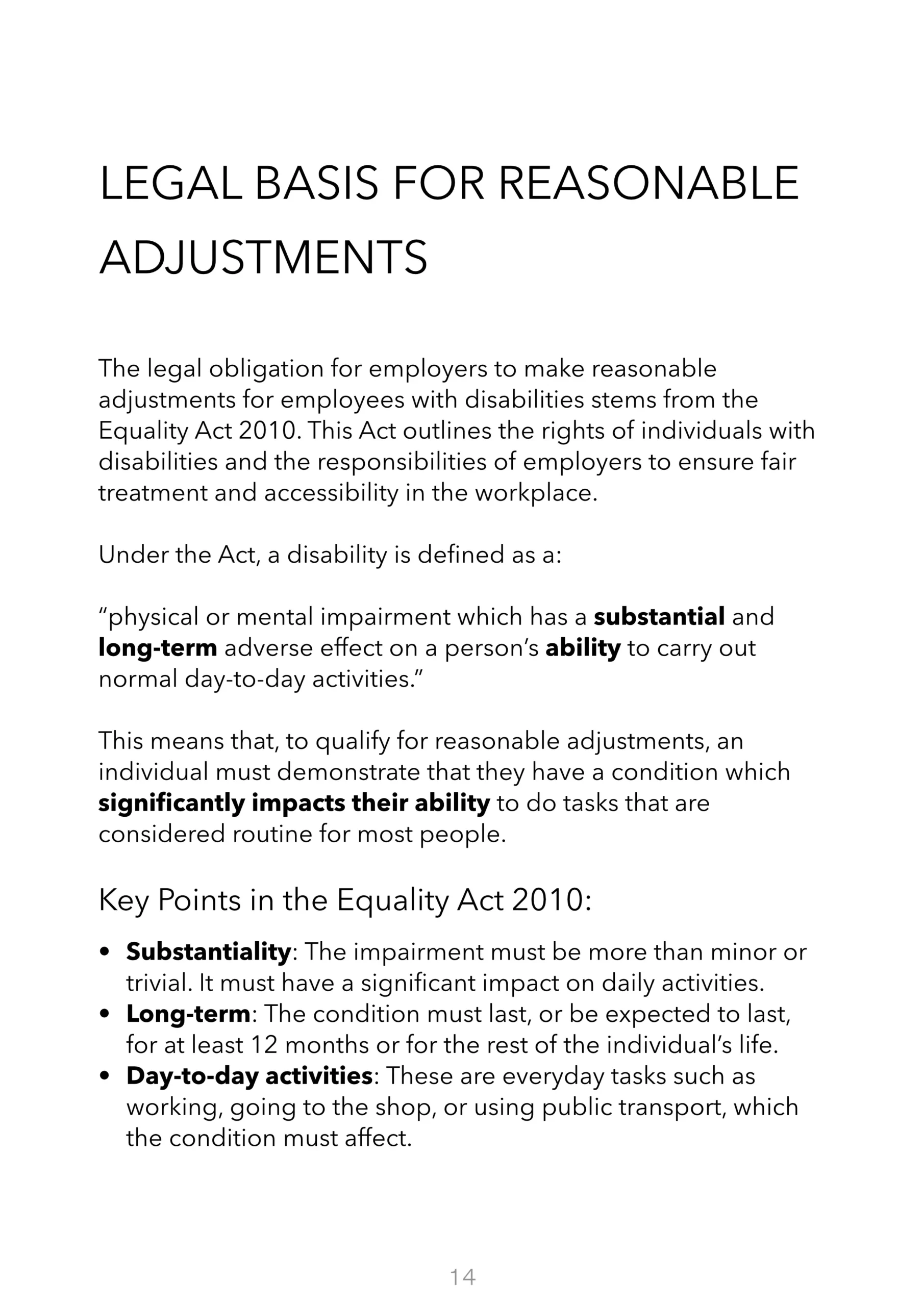
- Legal context in plain English, so you understand your rights under the Equality Act 2010 and what ‘reasonable adjustments’ really mean in practice.
- Copy-and-paste phrasing and scripts for emails, meetings and reviews – so you’re not left decoding legal jargon on your own.
- Guidance on what to do if your request is ignored or refused, including internal processes and when Employment Tribunal routes may be relevant.
- Examples tailored to neurodivergent, disabled and chronically ill professionals, grounded in real-life workplace barriers.
This guide will help you to:
- Make sense of what support could look like before conversations become stressful or urgent
- Feel more confident going into interviews, reviews or check-ins – even if you’re not ready to ask for anything yet
- Save time and energy by seeing clear examples, rather than trying to work it all out during burnout or conflict
- Reduce second-guessing by understanding your rights early, so you’re not left scrambling later
Why this guide exists
You shouldn’t have to burn out before anyone takes your needs seriously.
But too many disabled, neurodivergent and chronically ill professionals only learn what they’re entitled to when things are already falling apart.
Support should be available long before crisis hits, and understanding your rights shouldn’t require becoming an expert in the Equality Act.
This guide exists to change that.
It breaks the law into clear, everyday language and shows you the real adjustments people use at work right now. It names what’s possible, what’s common, and what employers often overlook, so you don’t have to guess what’s “reasonable.”
But the purpose extends beyond mere information.
By making these adjustments visible and accessible, the guide challenges the quiet pattern where the burden to secure fair conditions falls entirely on you. It provides you with the language, examples and confidence to ask for what you need without burning yourself out in the process.
Who it’s for
- People entering, returning to or struggling in work who want to understand their rights
- Disabled, neurodivergent and chronically ill professionals navigating unclear or unsupported environments
- Managers and advocates aiming to create accessible and inclusive workplaces
- Recruiters and HR leads wanting to build inclusive hiring processes under the Equality Act 2010
Created by SupportHub Tools CIC, a UK-based non-profit focused on workplace inclusion, neurodiversity and accessibility under the Equality Act 2010.
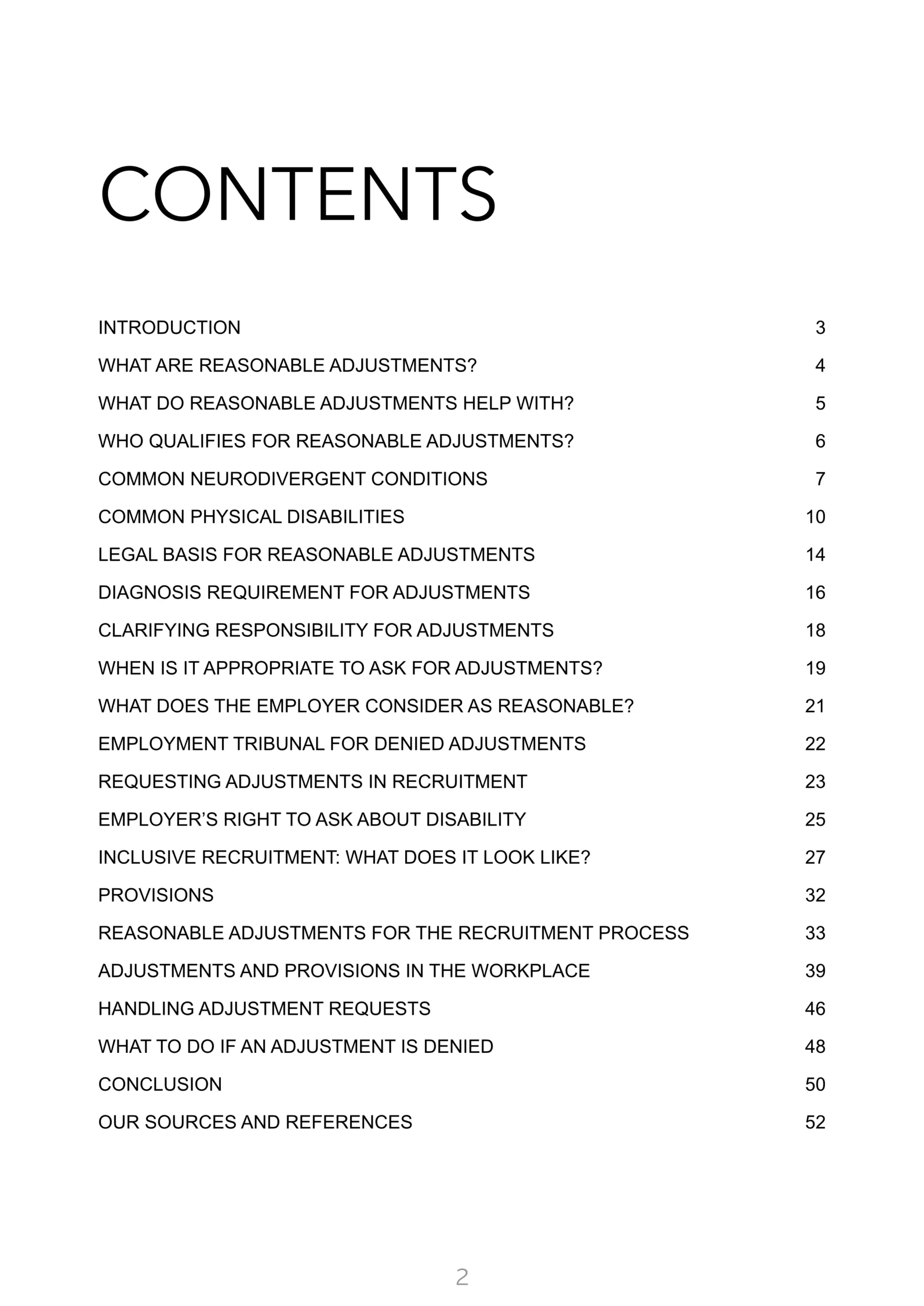
Format: Digital PDF (53 pages, instant download).
Please note:
This guide is intended for digital individual use only. Printing is disabled to protect against redistribution. For team or business licences or to distribute within an organisation, please get in touch with us at info@supporthubtools.co.uk.
This is a UK-specific resource and may not align with workplace legislation or norms outside of the UK.

Zarah M. –
I used this guide to prepare for a conversation with my manager after months of struggling with workload and sensory overwhelm. Having specific examples made it so much easier to explain what I needed without feeling like I was asking for special treatment. It didn’t fix everything overnight, but it definitely helped me get the conversation started.
I really liked how the examples were categorised as well. It made it much easier to understand the most relevant adjustments for my specific situation.
SupportHub Tools –
Thank you so much for sharing this, Zarah. I’m really glad the examples helped you organise your thoughts and start that conversation. Taking that first step is often the hardest part. It’s encouraging to hear the categories made things easier to navigate for your situation.
Data Analyst, Leeds –
My condition isn’t visible and it fluctuates, so I always thought I just had to manage on my bad days. The examples in the guide helped me understand that flexible pacing is actually a reasonable thing to ask for.
I liked that the examples weren’t one-size-fits-all. It made me feel less alone and more like my situation is actually recognised somewhere.
SupportHub Tools –
Thank you for sharing this. Fluctuating and invisible conditions are so often misunderstood, and it means a lot to hear the guide helped things feel more recognisable and valid for you. I’m glad the examples supported you in identifying what would make day-to-day work more manageable.
Hospitality staff, Manchester –
Having real examples in front of me made such a difference because I could point to something concrete instead of talking in vague terms.
I also liked the section on what to do if things get ignored.. just knowing the steps made me feel more in control.
SupportHub Tools –
Thank you for leaving this review. Having something concrete to refer to can make such a difference, especially in fast-paced roles. I’m really glad the section on next steps helped you feel more in control of the process. You deserve clarity when things aren’t being taken seriously.
ANON, London –
I’ve always avoided reading legal stuff because it just makes my brain shut down, so I never properly understood what counted as a reasonable adjustment. This guide explained it in a way that didn’t make me feel stupid or overwhelmed.
I realised a lot of the things I blamed myself for not coping with were actually things that could be adjusted. That part alone made me feel less guilty. I haven’t made a formal request yet, but I feel more prepared and less scared of getting it wrong.
SupportHub Tools –
Thank you for sharing this, it really means a lot. Legal language can be overwhelming for so many people, and the whole aim of the guide is to make this information feel usable rather than intimidating. I’m glad it helped shift some of the self-blame and made things feel a bit clearer and less daunting. Wishing you confidence as you decide your next steps.